-
Planetarium
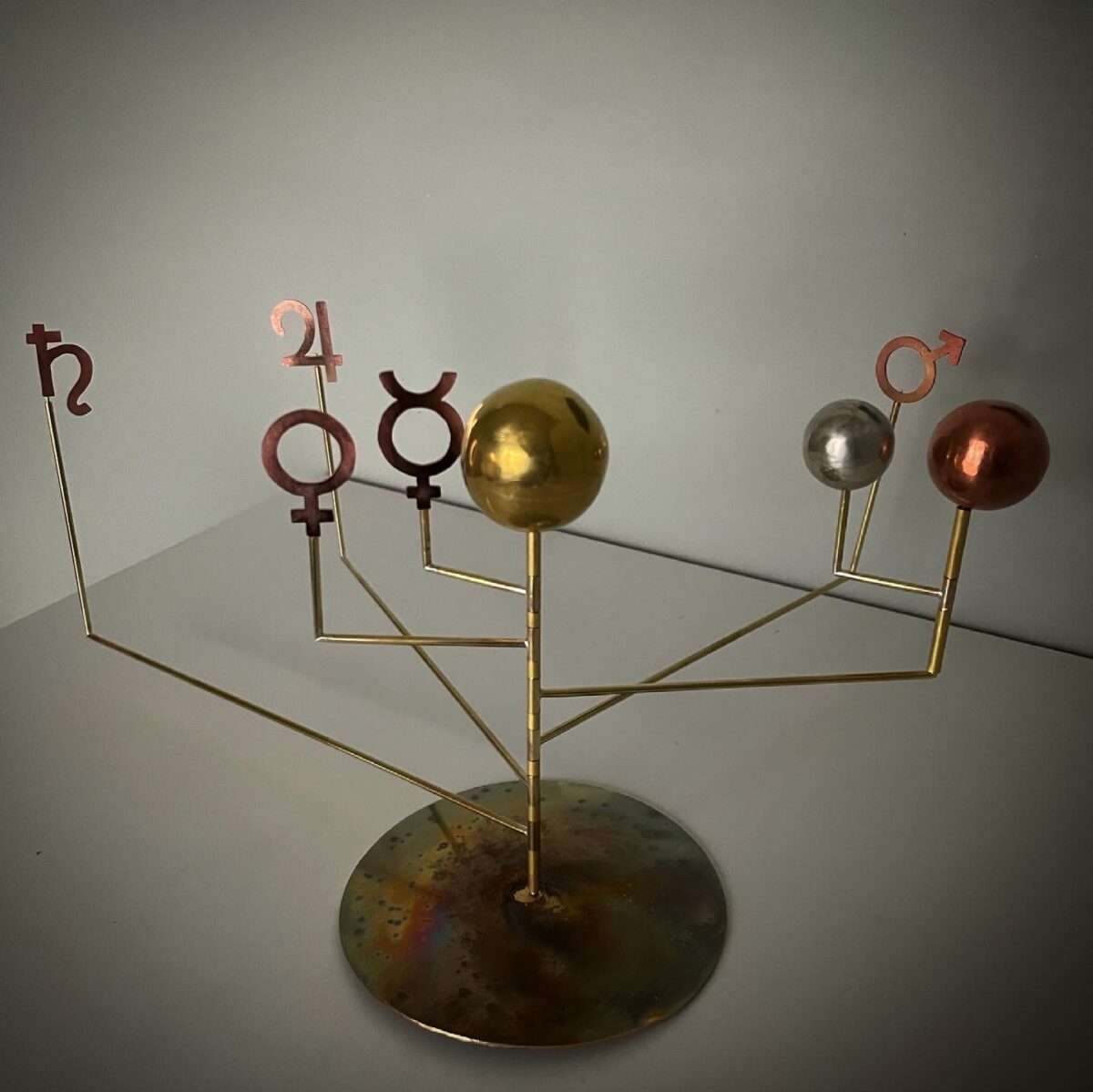
Heliocentric planetarium with Earth and the (symbols of the) seven sky objects that are visible with the naked eye. These seven objects move differently than all the (other) celestial objects we see. In ancient Greece they were therefor called ‘planetes’ (‘wanderers’). They are the sun, the moon, and the planets Mercury, Venus, Mars, Jupiter and…
-
Roman Portable Sundial
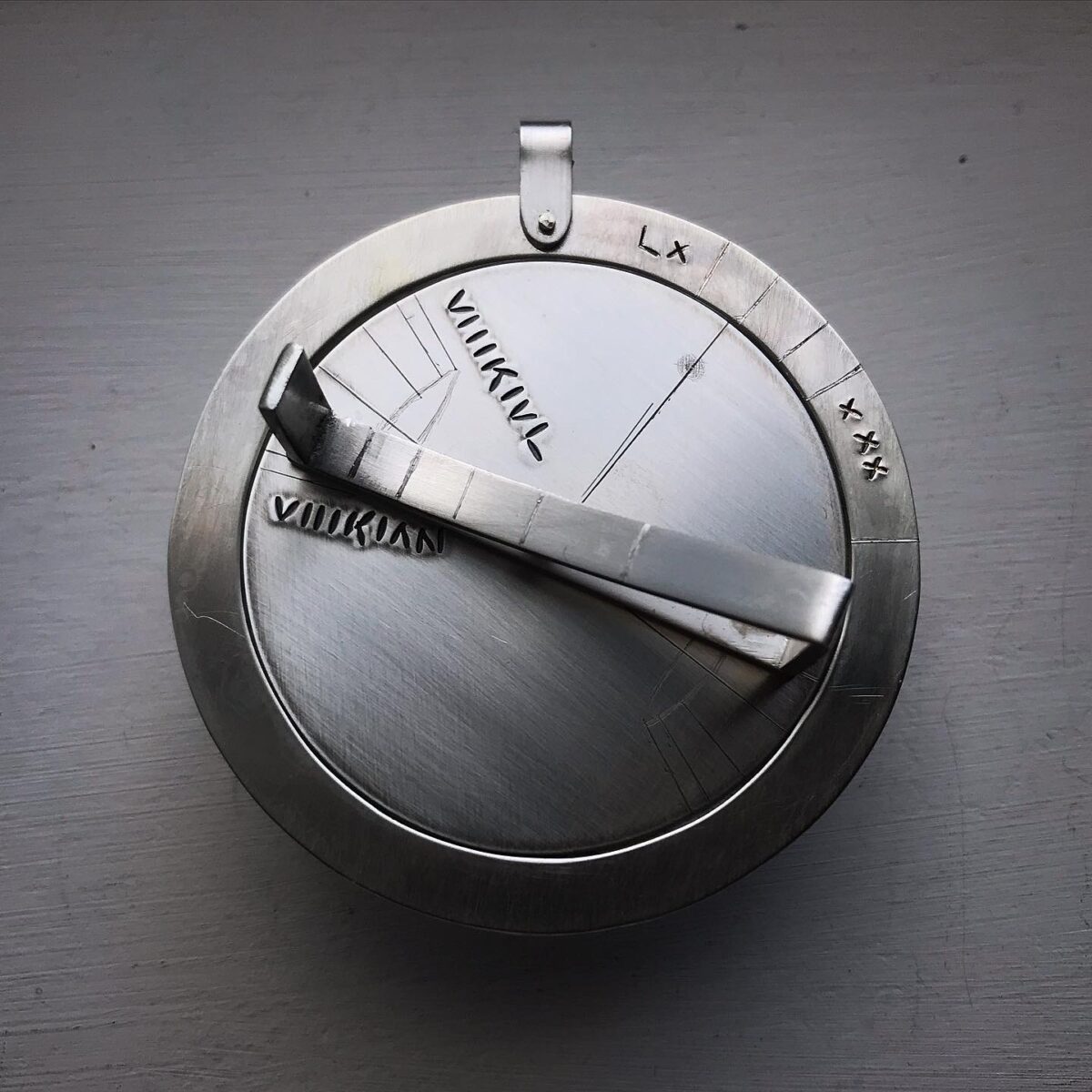
This portable sundial is inspired by a Roman dial in the collection of the Museum of the History of Science in Oxford (51358). It can be set to any latitude (i.e. the numbers on the outer ring) and any date (i.e. the months on the inner disc). From the shadow of the gnomon you can…
-
Armillary Sundial
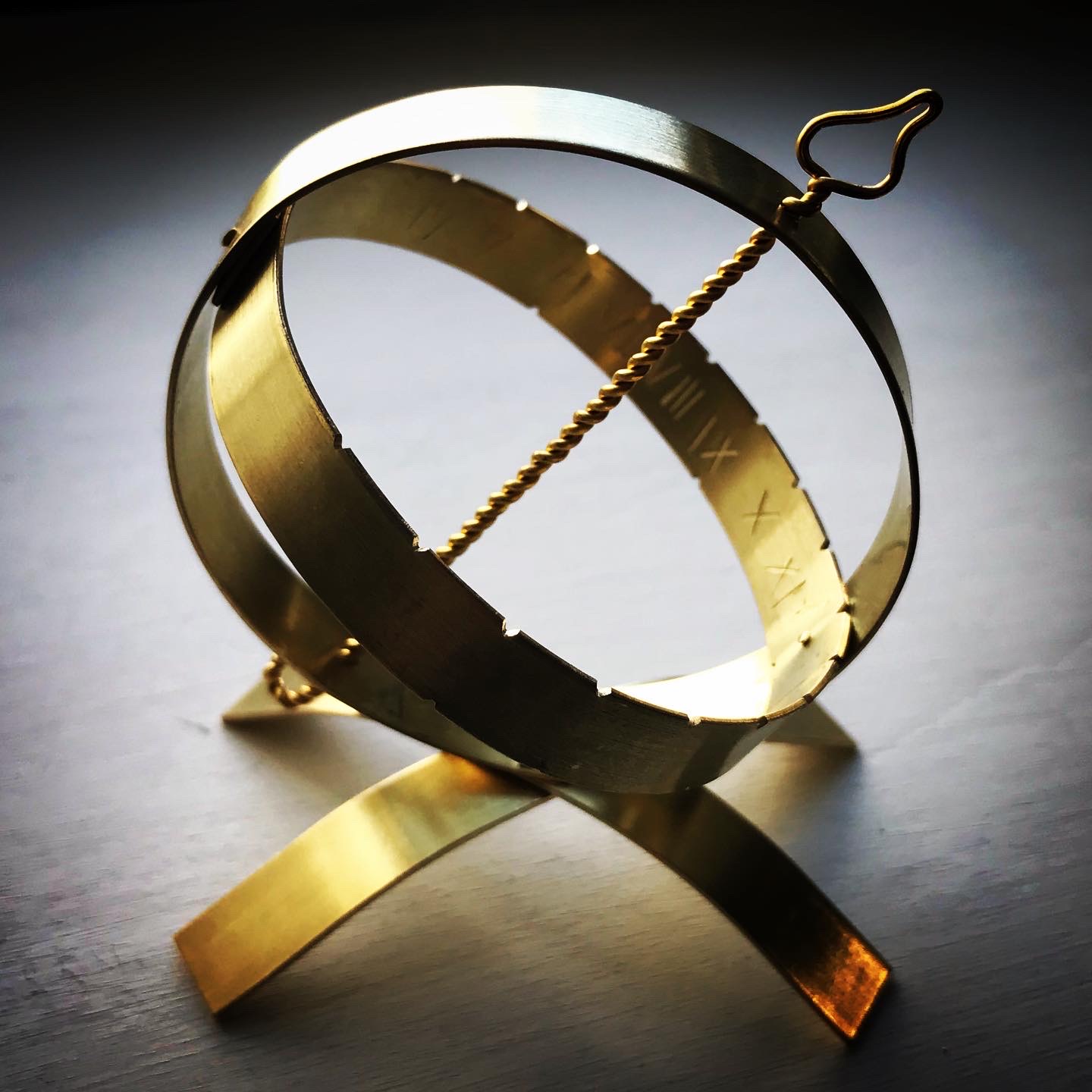
Equatorial sundial with gnomon (the arrow) pointing to the true North, so parallel with the Earth’s rotating axis. Exactly perpendicular to the gnomon’s style is the ring with the hour scale, which is parallel to the equator of the Earth. The inclination of the ring with the hour scale is 51 degrees, as this is…