-
Head Jewel
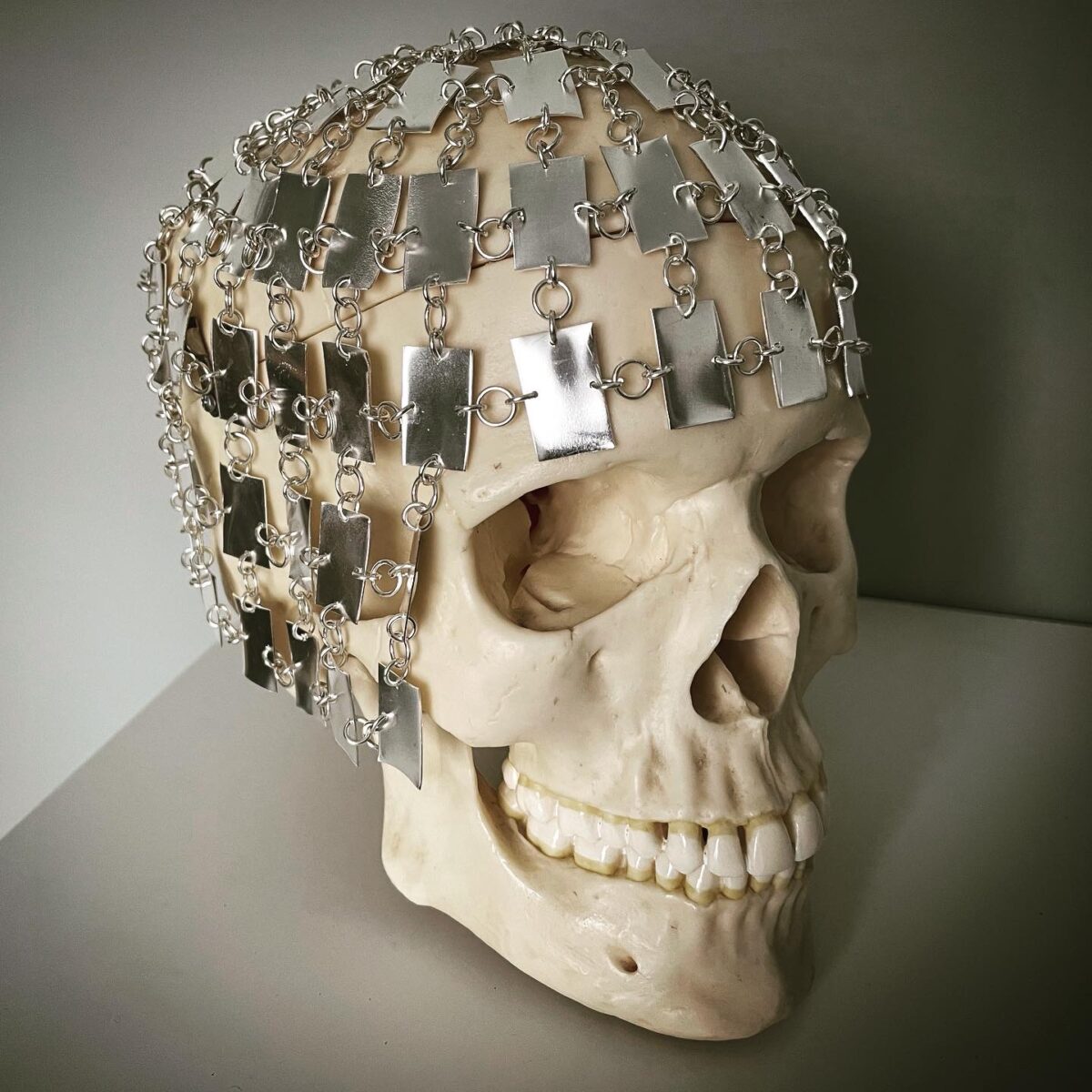
Inspired by both armour and jewellery, by many different cultures in many different times. The plates have the lustrous colour of pure silver. They are very soft and their warping forms bring liveliness in the repetitive pattern. < 2021 / fine silver (plates) and sterling silver (rings) / 50-55 cm (circumference) x 20 cm (length)…
-
Dragonscale Chainmaille Bracelet
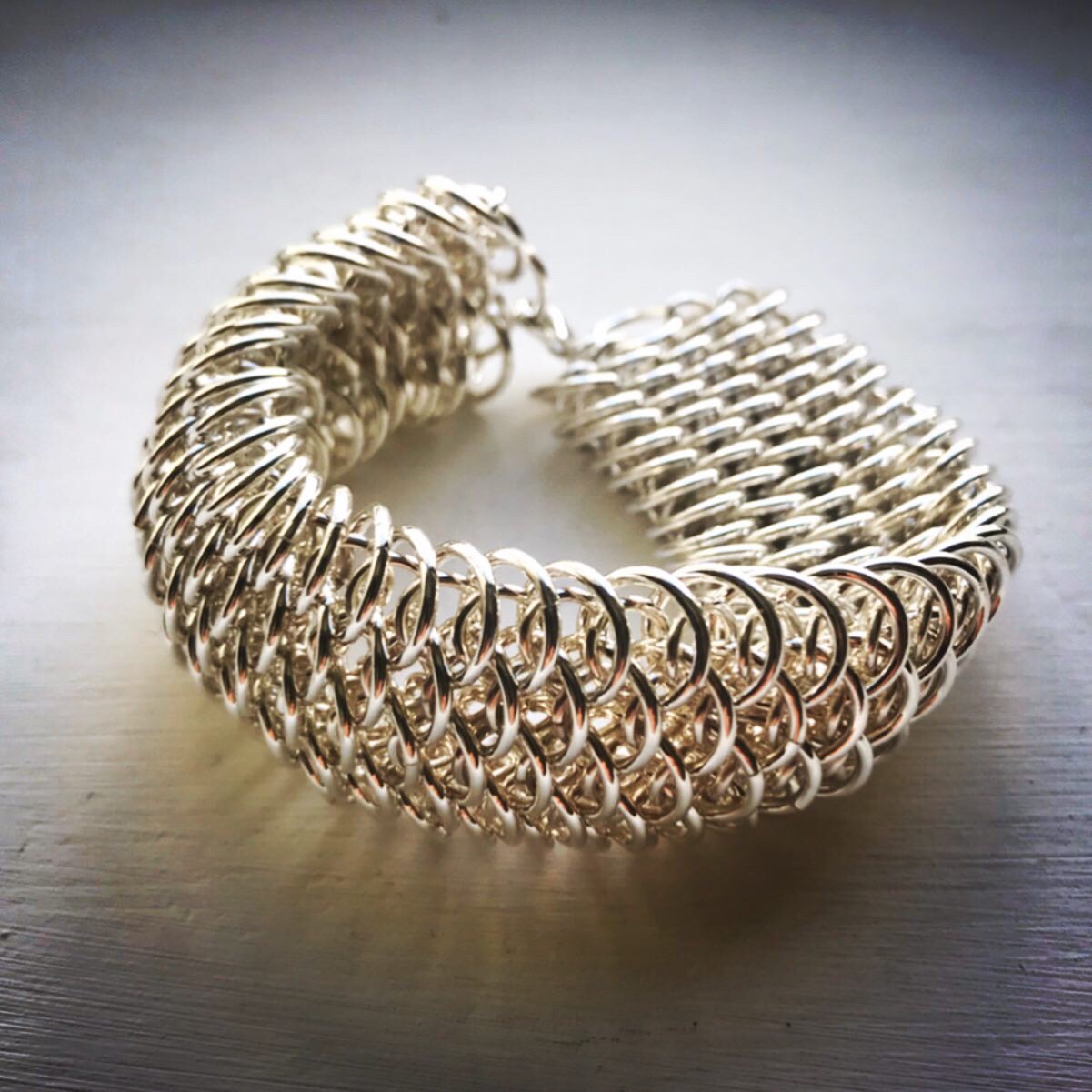
The dragonscale weave is a relatively intricate chainmaille weave and needs a rather high amount of rings. But the result is stunning and truly resembles scales. The many rings give the bracelet a big weight, but the weave has a beautiful and surprising flexibility. < 2019 / sterling silver / 16.5 cm (including hook) x…
-
Planetarium
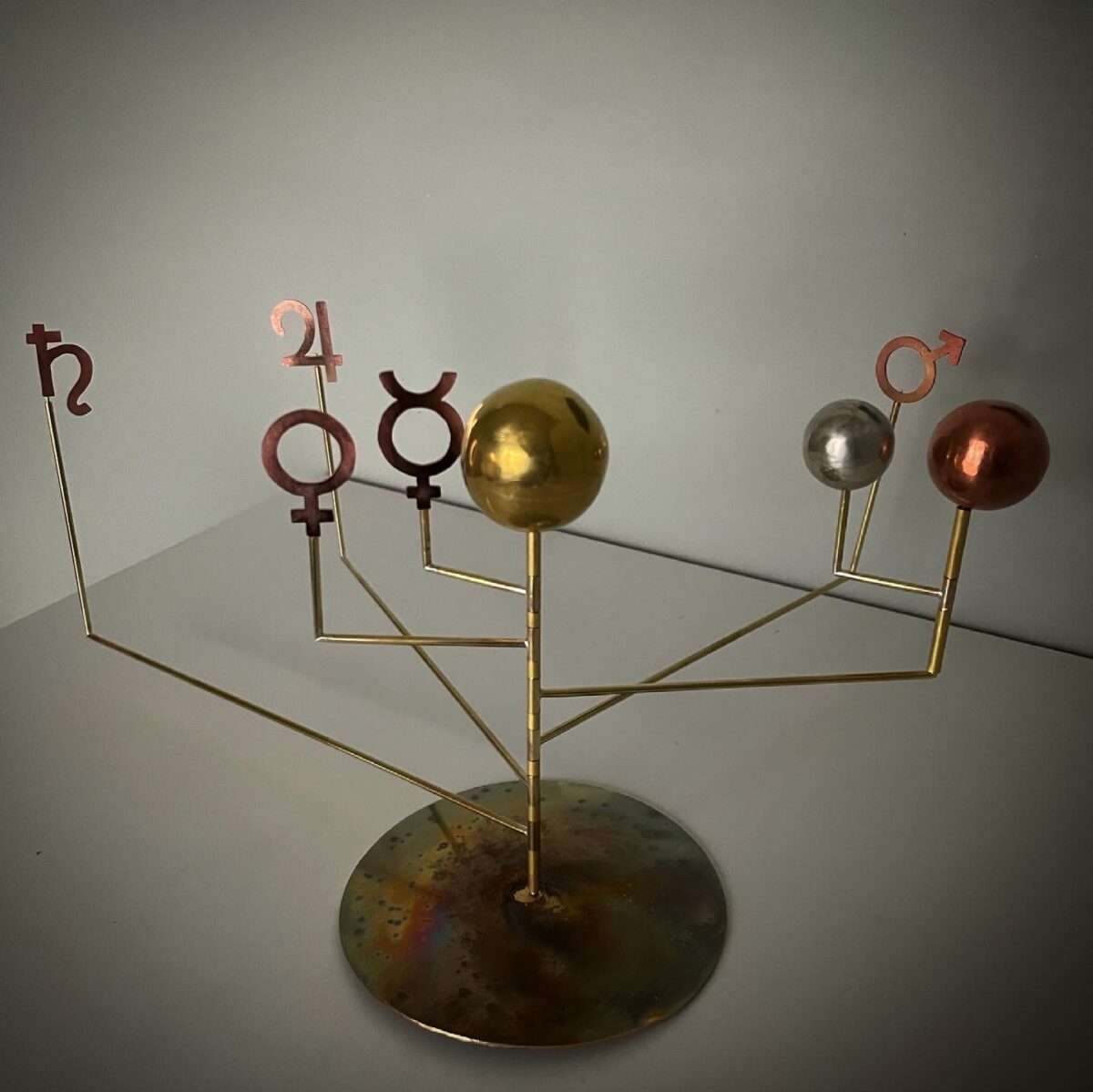
Heliocentric planetarium with Earth and the (symbols of the) seven sky objects that are visible with the naked eye. These seven objects move differently than all the (other) celestial objects we see. In ancient Greece they were therefor called ‘planetes’ (‘wanderers’). They are the sun, the moon, and the planets Mercury, Venus, Mars, Jupiter and…
-
Roman Portable Sundial
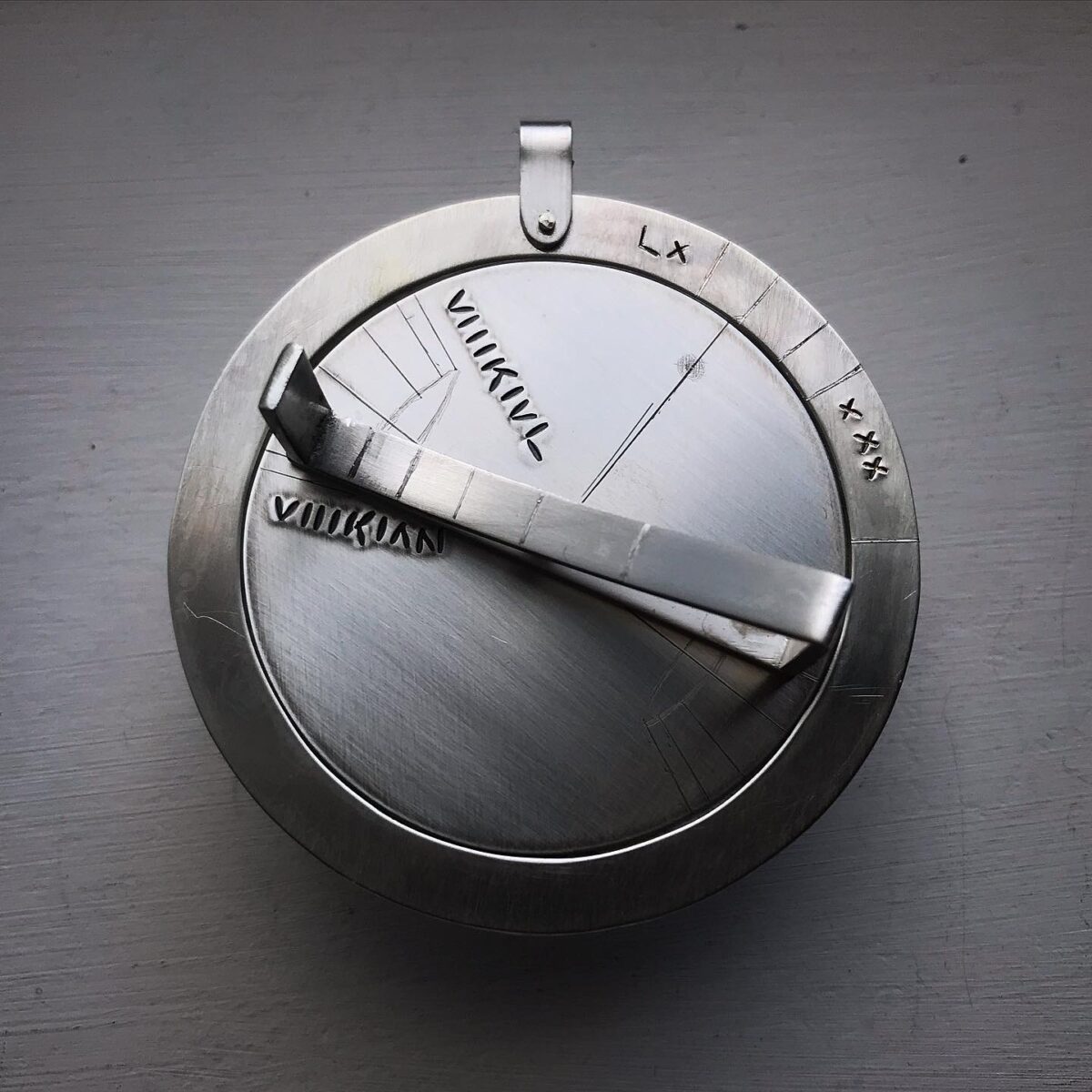
This portable sundial is inspired by a Roman dial in the collection of the Museum of the History of Science in Oxford (51358). It can be set to any latitude (i.e. the numbers on the outer ring) and any date (i.e. the months on the inner disc). From the shadow of the gnomon you can…
-
Armillary Sundial
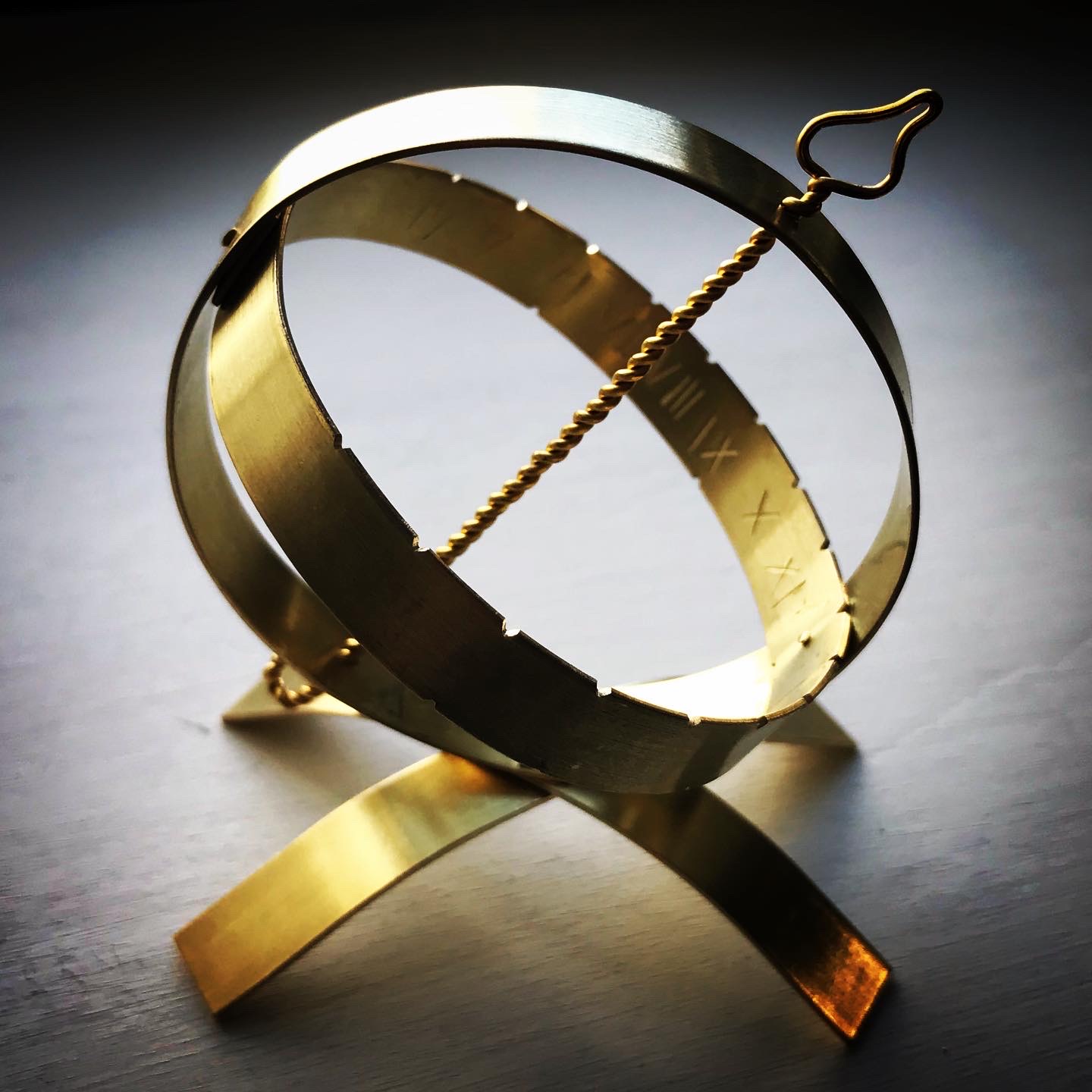
Equatorial sundial with gnomon (the arrow) pointing to the true North, so parallel with the Earth’s rotating axis. Exactly perpendicular to the gnomon’s style is the ring with the hour scale, which is parallel to the equator of the Earth. The inclination of the ring with the hour scale is 51 degrees, as this is…
-
Lunula Amulet Pectoral
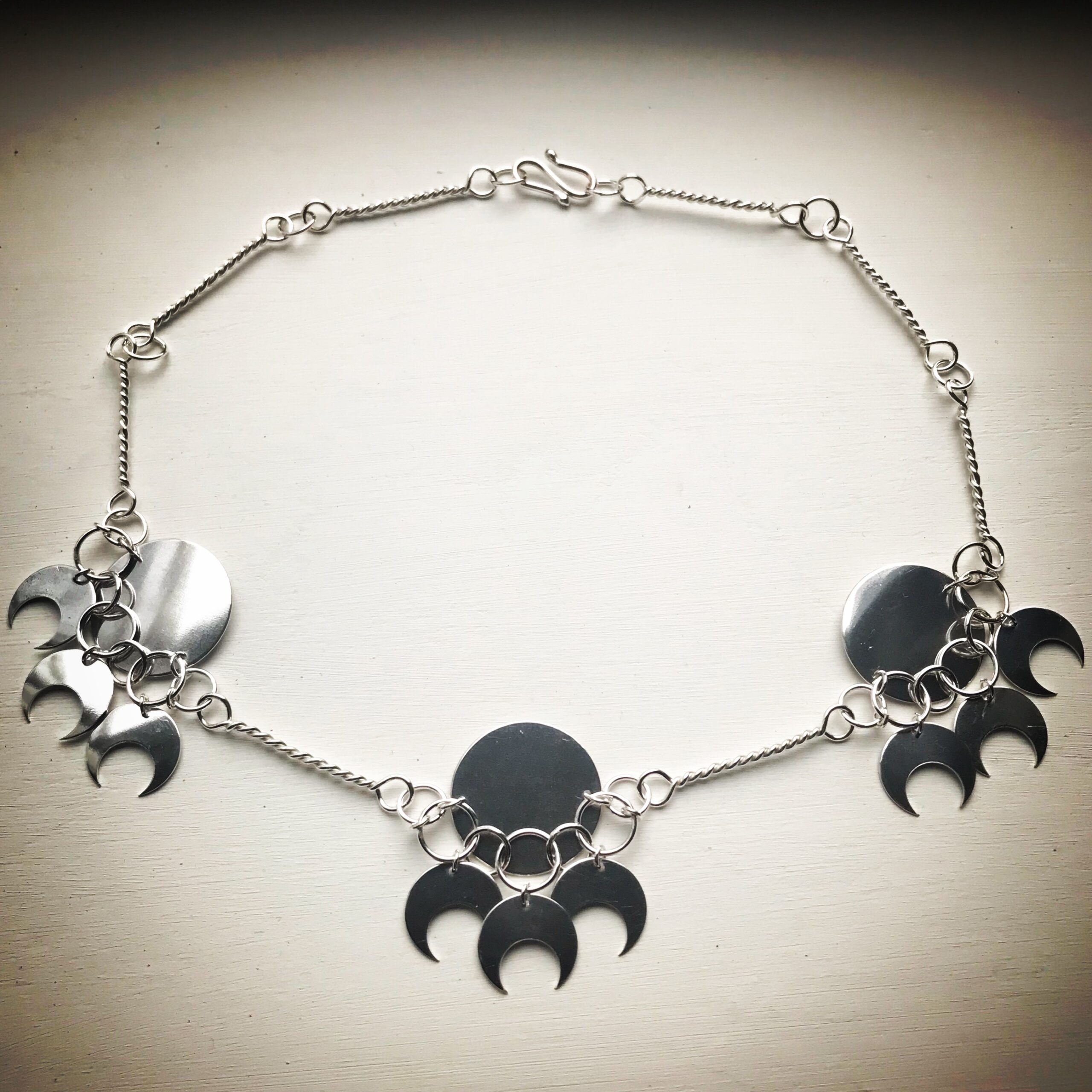
Lunula – or crescent shaped – amulets were worn to ward off evil. This piece is based on a Thracian pectoral from the 4th or 3rd century BCE. It is composed of sections of torded silver wire alternating with rings and three large discs. Under each of the three discs three lunula pendants suspended with…
-
Celtic Knot Bracelet
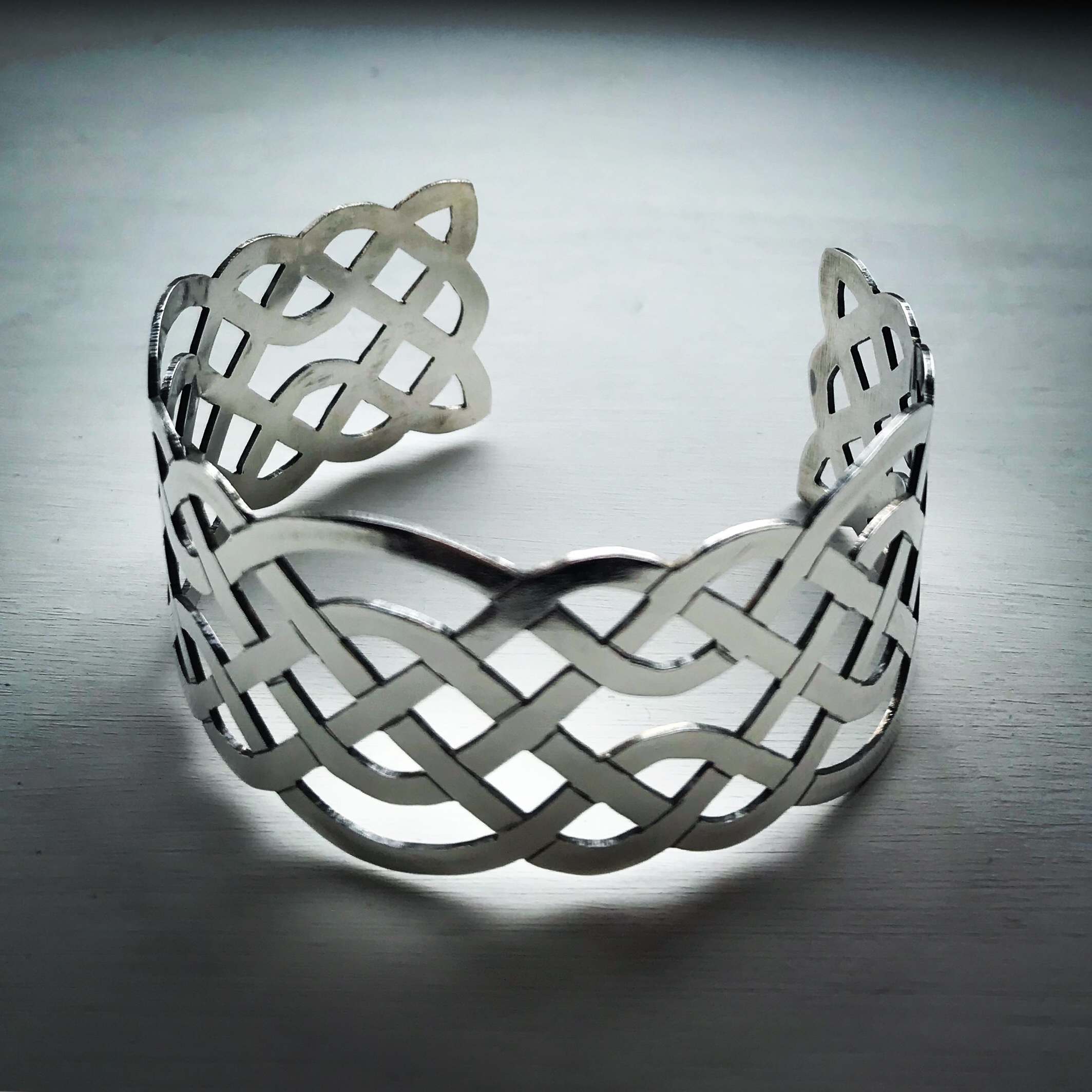
So-called Celtic knots are basically ornamental interlace patterns, usually with an endless design. They appear as ornaments since the Roman era, but are best known from early medieval grave monuments and manuscript illuminations. The design has strict rules but unlimited possibilities. < 2015 (design) and 2019 / sterling silver / 6 cm diameter x 3 cm…
-
Roman Sun & Moon Necklace
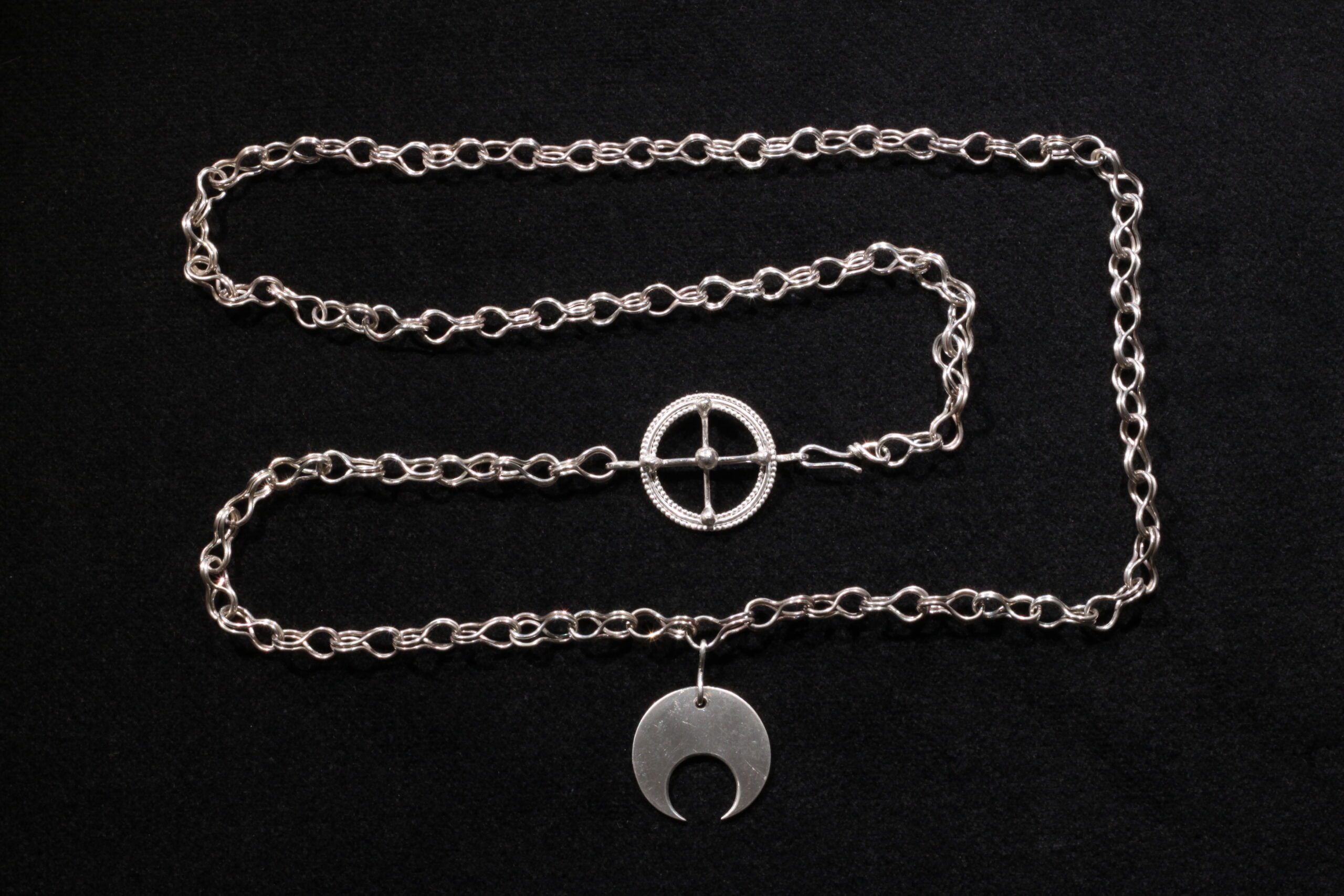
Silver chain necklace with 70 double figure-of-eight links, a crescent shape pendant (moon symbol) and a clasp in the form of a four-spoked wheel (sun symbol). When the necklace is worn double around the neck, the clasp and pendant take up their correct opposite positions, the former at the back and the latter at the…
-
La Catrina
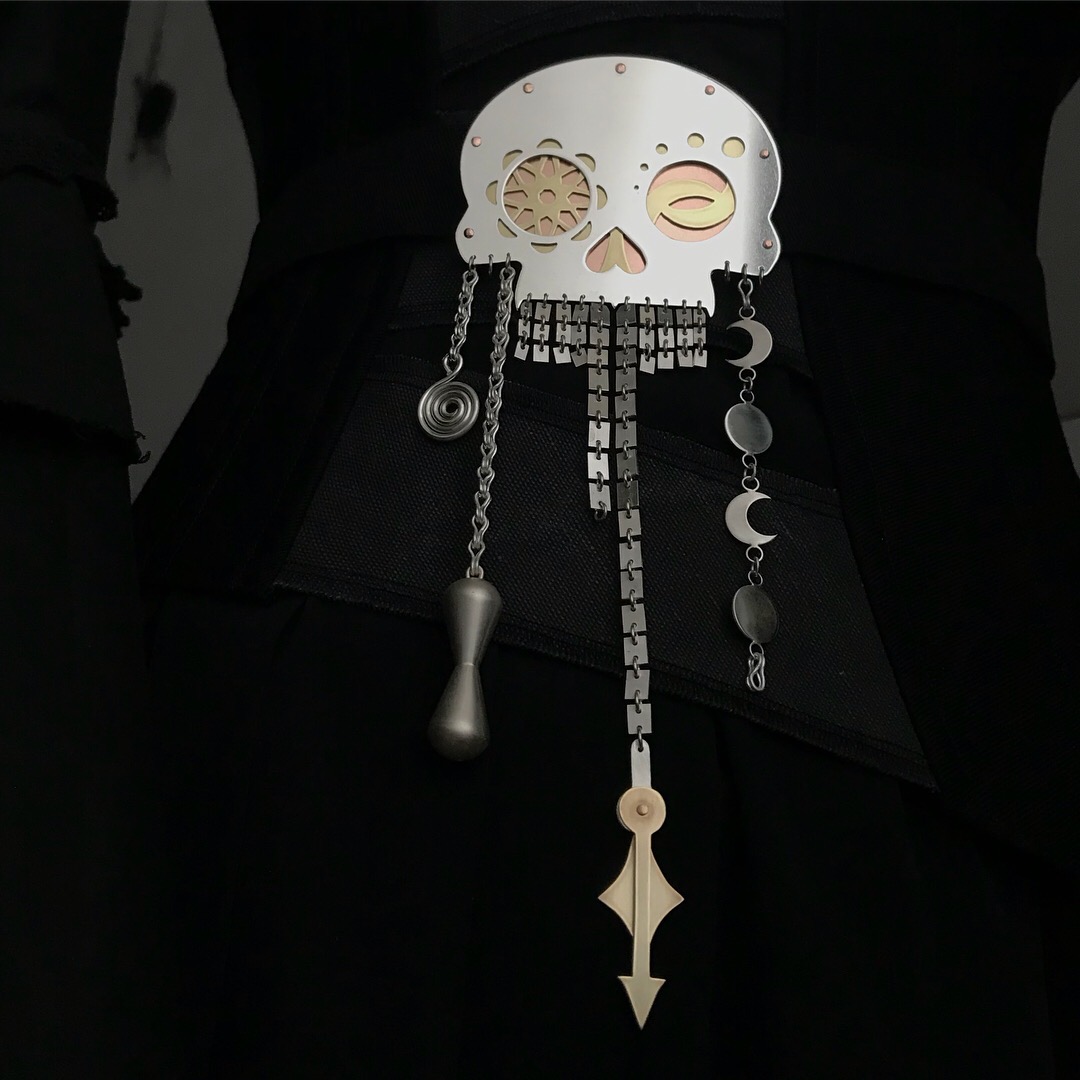
La Catrina is a chatelaine jewel inspired by the Mexican Dìa de Muertos. The belt element is a decorated skull, representing the figure of ‘La Catrina’, who goes back to the Aztec goddess of the underworld, Mictēcacihuātl. The flickering teeth that hang down from the skull refer to this goddess, who was often shown with her…